Source CNC Roll Formed Ceiling Stud and Track for Structures
Find 30 listings for cnc roll formed ceiling stud and track solutions. Compare specifications including thickness, material, and surface treatment options for steel workshop and residential wall applications. Evaluate customization, installation ease, and structural strength to select the right components for your project needs.
Key considerations
Products List


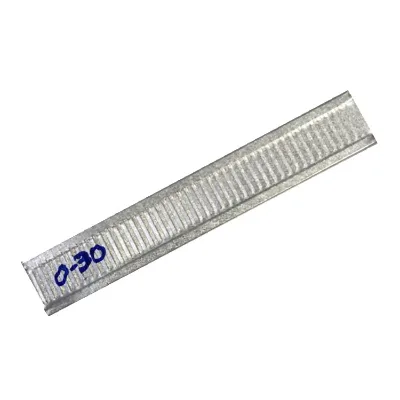

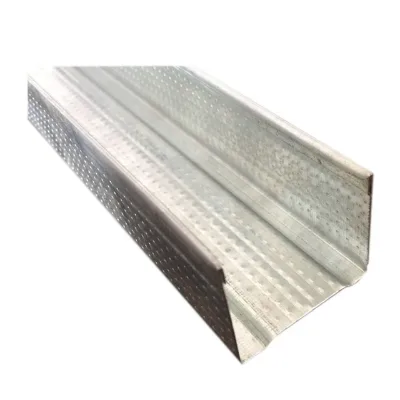


Comprehensive Sourcing Guide
CNC Roll Formed Ceiling Stud and Track Sourcing Guide
Buyers evaluating CNC roll formed ceiling stud and track systems must first distinguish between structural steel beams and lightweight drywall framing components, as the supplied data indicates a mix of heavy-duty channel steel and residential wall studs. The observed product range includes high-strength steel beams for bridges and workshops alongside perforated galvanized steel sheets designed for suspended ceiling systems in hotels and villas. This distinction is critical because the load-bearing requirements for a steel structure platform differ fundamentally from those of an indoor ceiling decoration project.
Procurement teams should verify whether the specific listing targets the "Channel Steel" category for heavy fabrication or the "Wall Stud" category for gypsum board installation. The available data confirms that products exist with forming processes like hot-rolled steel for structural members and automatic roll forming for thinner gauge sheets ranging from 0.3 mm to 1.5 mm. Understanding this split ensures that the selected component matches the intended application, whether it is a total solution for a steel fabricated house or a simple residential wall structure update.
Product Scope and Observed Listing Signals
The market listings for these components reveal a diverse array of specifications, including thicknesses from 0.4 mm up to 1.5 mm and standard lengths of 3000 mm, which directly influence the structural integrity and installation method. Buyers must carefully cross-reference the "Type of Steel For Building Structure" with the specific "Thickness" listed, as high-strength steel is noted for heavy applications while thinner gauges are often intended for light-weight ceiling systems. The presence of both "Hot Rolled Steel" and "Galvanized Steel" materials suggests that the supply chain offers options for both raw structural strength and corrosion resistance.
Observations indicate that customization is a primary feature, with suppliers offering "Custom Products" in various shapes and designs to meet specific project needs. The data highlights that surface treatments like "Hot Dip Galvanised" are common, providing a protective layer essential for longevity in humid environments or outdoor structures. However, the variation in "Shape" and "Design Style" implies that buyers cannot assume a standard profile; instead, they must confirm that the specific model number, such as JL-251020-001, aligns with their architectural drawings and load requirements.
Technical Specifications to Verify
When assessing technical compliance, the "Thickness" of the steel sheet is a primary variable that dictates the load capacity and rigidity of the final assembly. The observed range of 0.3 mm to 1.5 mm requires buyers to explicitly state their required gauge, as a 0.4 mm sheet suitable for a suspended ceiling system would fail in a high-load steel workshop application. Verification of the "Roller Station" count, noted as 14 in some listings, can also serve as an indicator of the precision and consistency of the roll-forming process, which affects the dimensional accuracy of the final stud or track.
Buyers must also scrutinize the "Surface Treatment" and "Material" claims to ensure the product meets environmental durability standards. While "Galvanized" and "Hot Dip Galvanised" are listed, the specific coating weight or thickness is not provided in the general facts, necessitating a request for mill test reports or coating specifications. Additionally, the "Connection Form" is specified as "Bolt Connection," which requires verification of hole patterns and perforation status, as the data confirms some products are "Perforated Or Not," a critical detail for fastener selection and structural stability.
Compliance and Safety Documentation
Safety and compliance verification begins with confirming the adherence to recognized international standards such as GB and ASTM, which are explicitly mentioned in the product attributes. These standards govern the mechanical properties and chemical composition of the carbon structural steel, ensuring that the material can withstand the intended loads without failure. Buyers should request specific test certificates that validate the steel grade, such as Q235, against these standards to confirm that the material properties match the safety requirements of the building code in the project location.
In addition to material standards, the "Certification" status of the supplier and the product line must be validated, with ISO and CE marks appearing in the available data. These certifications indicate that the manufacturing process and the final product have undergone rigorous quality assessments for safety and environmental compliance. However, the presence of these marks in general listings does not guarantee that every specific batch meets the criteria, so buyers must demand current, project-specific certification documents rather than relying on generic supplier claims.
Cost Drivers and Commercial Terms
The commercial landscape for these components is influenced significantly by the "MOQ" (Minimum Order Quantity), which ranges from a single item to 3000 units or 1 ton, depending on the specific product configuration. Buyers with smaller project needs may find the single-item selling units advantageous, while large-scale infrastructure projects will benefit from bulk purchasing to reduce the per-unit cost. The "Selling Units" being listed as "Single item" suggests flexibility, but the "MOQ: 1 tons" for certain items indicates that volume discounts are likely tied to weight rather than piece count for heavier structural elements.
Pricing is further driven by the level of "Customization" and the complexity of the "Processing Service" required, such as bending, welding, or punching. The data shows that "Customized" options are available, which typically incurs additional costs compared to standard off-the-shelf profiles. Buyers should also consider the "After-sale Service" and "Warranty" terms, as a one-year warranty and online technical support add value but may be factored into the overall price structure. Understanding these variables helps in negotiating a total cost of ownership that balances initial purchase price with long-term maintenance and support needs.
Supplier Qualification and Quality Control
Supplier qualification should focus on verifying the "Place of Origin" and the specific manufacturing capabilities, as the data points to origins in both Shandong and Hebei, China. These regions are known for steel production, but the specific factory's capacity to handle "Automatic Grade" machinery and maintain consistent "Roller Materials" like #45 steel is crucial for quality control. Buyers must ensure that the supplier has the infrastructure to support the "Main Motor Power" and "Driving Mode" specifications required for high-precision roll forming, which directly impacts the dimensional consistency of the studs and tracks.
Quality control protocols must include a review of the "Surface Treatment" process and the "Condition" of the final product, which is listed as "New." Since the data mentions "Naked with Plastic Film" packing alongside "Carton" packing, buyers need to specify their preferred packaging to prevent damage during transit. Furthermore, the "Project Solution Capability" for graphic design and 3D model design indicates that some suppliers offer value-added services, but buyers must verify that these design services are backed by engineering expertise to ensure the final product fits the structural requirements.
Long-Term Procurement Checks
Long-term procurement success relies on establishing a reliable supply chain that can consistently deliver "Easy Installation" products with the specified "Feature" of high strength and light weight. Buyers should monitor the supplier's ability to maintain the "Standard" compliance over time, as variations in the "Carbon Structural Steel" grade could compromise the structural integrity of the building. Regular audits of the "Processing Service" capabilities, such as decoiling and cutting, ensure that the supplier can adapt to changing project demands without sacrificing quality or delivery timelines.
Finally, buyers must track the "After-sale Service" performance, particularly the responsiveness of the "Online Technical Support" team for any installation issues or defects. The "Warranty" of one year provides a baseline for accountability, but long-term relationships require a proactive approach to maintenance and potential re-ordering. By maintaining open communication regarding the "Application" scope, such as steel walkways or residential walls, buyers can ensure that the supplier remains aligned with the evolving needs of their construction projects and can provide consistent, high-quality components.
FAQs
What materials are used for cnc roll formed ceiling stud and track?
The products are manufactured from galvanized steel, specifically high-strength carbon structural steel grades such as Q235. This material choice ensures durability and resistance to corrosion, making it suitable for various structural applications including residential walls and industrial platforms. The steel is hot-rolled and then galvanized for enhanced protection.
Can I customize the dimensions of the steel studs and tracks?
Yes, customization is available for these steel components. Buyers can specify different thicknesses ranging from 0.3 mm to 1.5 mm and various lengths. The manufacturing process supports bending, welding, and punching to meet specific project requirements, allowing for tailored solutions in ceiling decoration and structural frameworks.
What certifications do these steel structure products hold?
These products hold ISO and CE certifications, indicating compliance with international quality and safety standards. The manufacturing process adheres to GB and ASTM standards, ensuring reliability for construction projects. These certifications provide assurance of material quality and structural integrity for applications in hotels, villas, and apartment buildings.
How is the surface treatment applied to the steel studs?
The surface treatment involves hot-dip galvanizing to provide robust corrosion resistance. This process coats the galvanized steel with a protective zinc layer, enhancing longevity in various environments. The resulting light grey finish is both aesthetic and functional, suitable for indoor ceiling decoration and suspended ceiling systems requiring durable materials.
What is the minimum order quantity for these steel components?
The minimum order quantity is typically one ton, though some listings indicate a lower MOQ of one unit. This flexibility allows buyers to procure small batches for testing or large volumes for extensive projects. The pricing varies based on the selected thickness and customization requirements, ranging from low to high values.
Where are these steel studs and tracks manufactured?
These products originate from China, specifically from regions including Shandong and Hebei provinces. The manufacturing facilities utilize advanced roll forming technology to produce consistent quality. Buyers can expect reliable supply chains from these established industrial hubs, ensuring timely delivery for global construction and decoration projects.